Vital Matter: Esperanza Cortés’s Embroidered Allegories
By A.E. Chapman
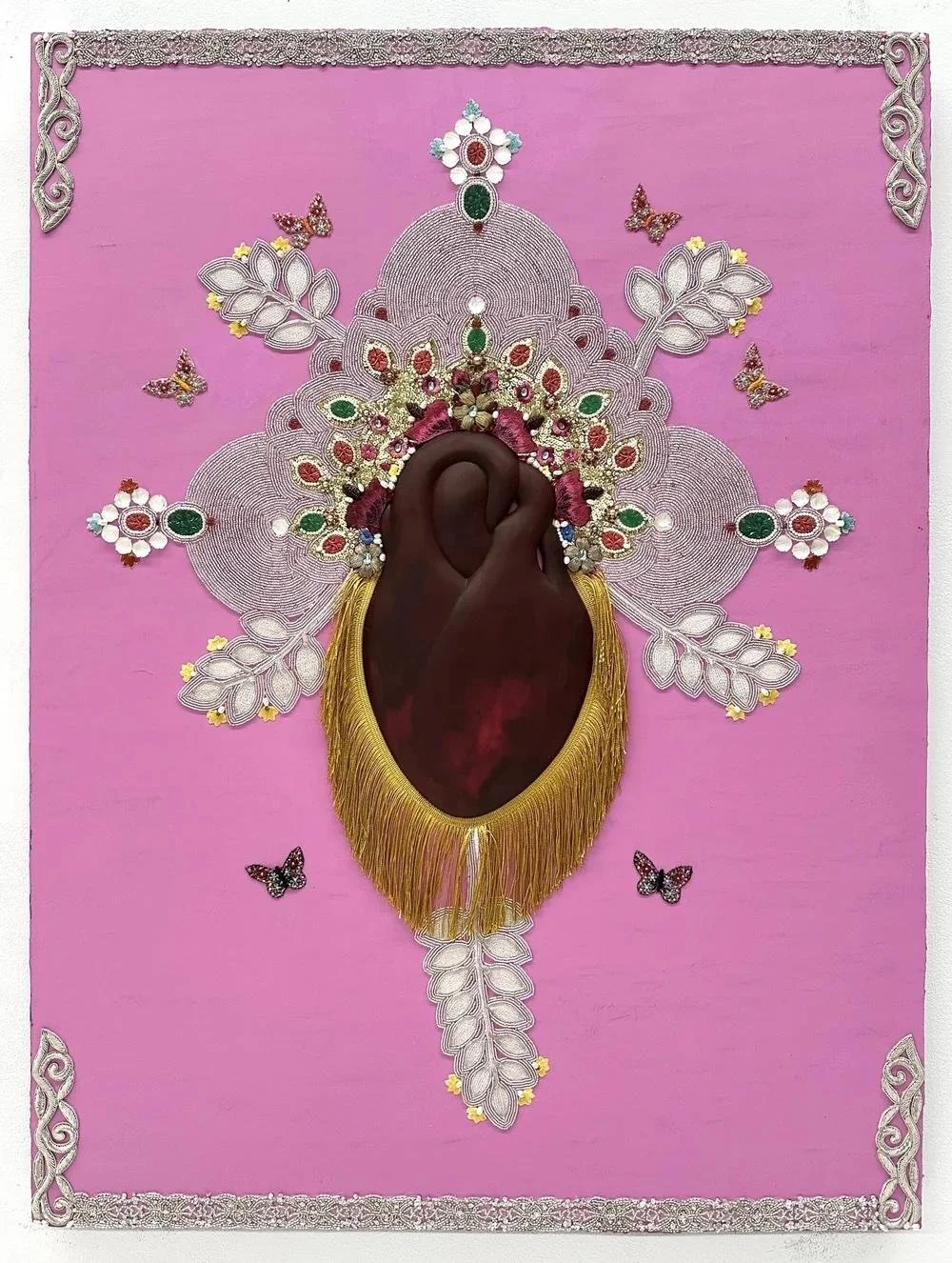
Esperanza Cortés, Entre las Mariposas/Among the Butterflies, 2025, clay sculpture, crystal beads, fresh water pearls, vintage pressed glass, glass beaded organza ribbon, embroidery, silk fringe, sequin, acrylic and encaustic on wood
The primary organ of life and vitality, the heart pulsates in a layered rhythm over the constant tempo of breath. Everpresent, even newborns demonstrate an understanding of rhythm, perhaps developing this sense while in the womb via the beat of the mother’s heart and the pace of her step. Esperanza Cortés’s Embroidered Allegories series celebrates forces of life with a particular reverence for matriarchal power and its fiercely protective yet benevolent role in nurturing corporeal, ecological, and spiritual life. The artist began this series of paintings and sculptures over ten years ago after an injury from a bus accident halted her career as an Afro-Latin dance instructor. In the wake of this loss, Cortés began deconstructing her dance costumes and incorporating their elements, such as ornate beading and embroidery, into her work, repurposing these parts with found materials including vintage pressed glass, crystals, beads, chains, amulets, pearls, and military fringe to name a few. The artist’s dance background manifests in the intricate patterns prevalent in her oeuvre, passionately vibrant palettes, and gestures of dangling chains that break out of the confines of their canvas structures. The body of work vibrates with a resonant, intricate cadence, composed of soft notes of delicate, radiating flora imagery flourishing across the surfaces and hard thumps of tough tones reverberating from leather, chain, glass, and metal parts embedded in the works. Just as the beat of the heart keeps time, Cortés's works also hold time—from the laborious hours that the artist spends creating them to the layered lives of the found materials and their relationships to those connected to them before her. The intricacy of the work reflects not only mosaics of lived experience, people and materials interconnected, but also the complicated circuits of consumption that the materials travel through over time.
Entre las Mariposas/Among the Butterflies (2025) features a clay sculpture of a fiery, blood red aorta emerging from the center of its composition as though beating, surrounded by fine, beaded butterflies fluttering across a bright pink background. The pumping heart and fluttering butterflies evoke not only a sense of movement but of sound, the flapping of gossamer wings layered over a deep, base thumping of the aorta. An allegory for the power of the heart and its elastic capacity for love and hope, Cortés created the work inspired by the Mirabal sisters' activism in the Dominican Republic. The sisters, Patria, Minerva, and María Teresa, were known by the nickname Las Mariposas (the butterflies) as a covert strategy in organizing a revolutionary movement against dictator Rafael Leónidas Trujillo Molina. In Entre las Mariposas/Among the Butterflies, Cortés pairs the butterfly as a symbol of bravery with the vibrant pink, a color referencing both the rich technicolor found in nature but also a color featured in el traje de luces (Suit of Lights) bullfighter costumes. Cortés’s personal matrilineal lineage includes a line of female bullfighters who once wore el traje de luces. Ultimately a performance of life and death, the pink color and gold ornament of the fighter’s costume heighten the drama and showmanship of the spectacle. Prescriptive ideas often define performance and narrative as having a beginning and an end. Integral to her work, Cortés underscores that the performance does not finish with a bow but continues as a collective ripple—the act goes on, the materials persist.
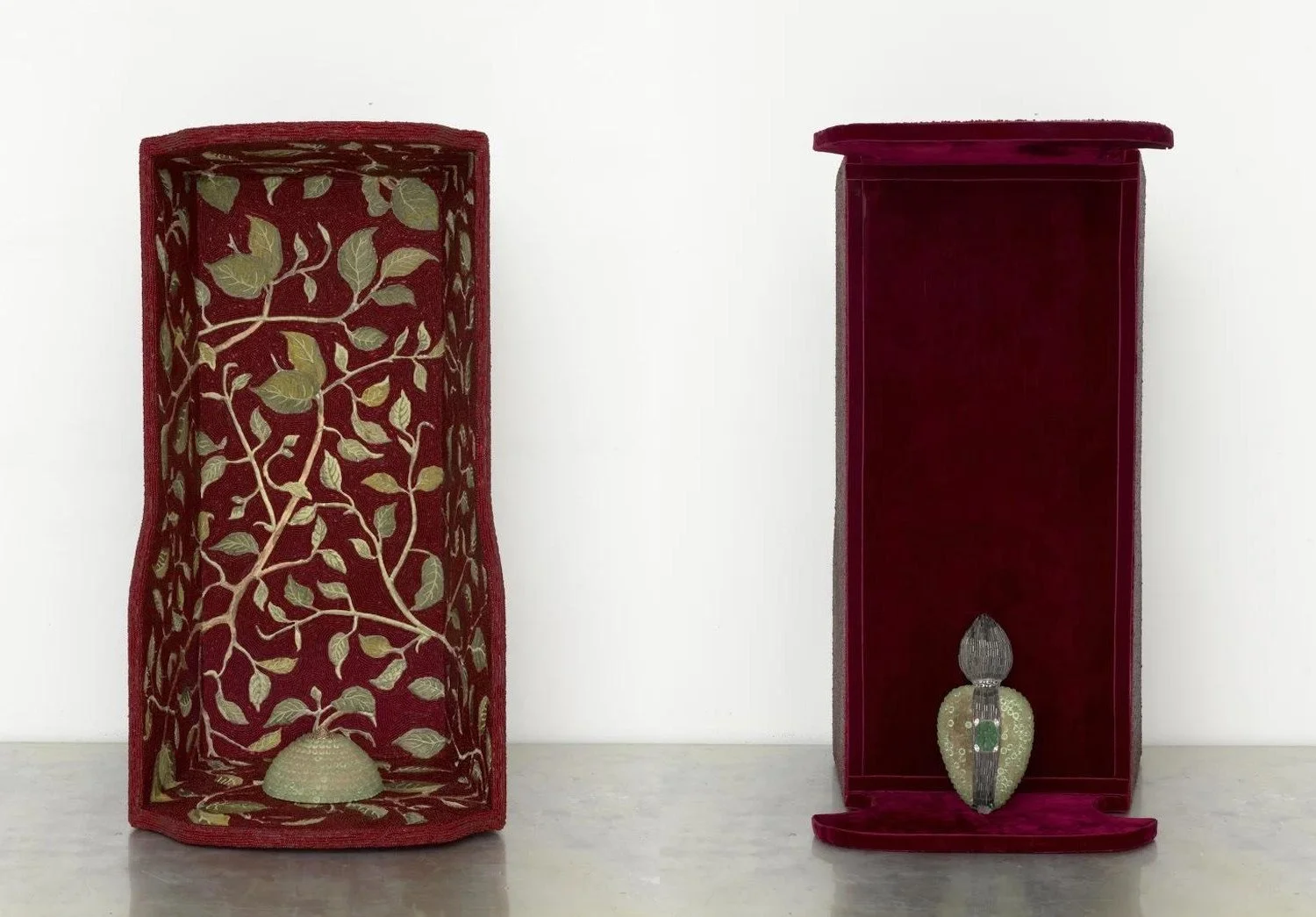
Esperanza Cortés, Cradle, 2025, vintage wood cradle, glass beads, personal embroidery, crystals, gold plated chain, encaustic, 33 x 22 x 16”
Esperanza Cortés, Cradle/Reverse, 2025, vintage wood cradle, crystals, faceted crystals, sterling silver, bugle beads, glass beads, velvet, 33 x 22 x 16”
Cortés’s engagement with resilience regarding the body, nature, and feminine power finds affinities in the work of Frida Kahlo, while her incorporation of found objects, such as old chairs, cradles, and chandeliers as seen in Red Rain (2024) and La Cordobésa (2016-2017), shares a rapport with Beatriz Gonzalez’s exploration of the exploration of the domestic. Most notably, Gonzalez’s Lullaby (1970) and Cortés’s Cradle (2025) demonstrate the strength of maternal love in the face of systemic violence. In Cradle, Cortés transforms a 100-year-old cradle with vintage green glass that forms vines covering the inside of the cradle. The artist meticulously adorns the wood with embroidery, sequins, and glass beads, symbolizing decoration for a royal; yet, the cradle immediately resembles a coffin being reclaimed by the earth. Alluding to precious minerals, the green glass points to the exploitative colonization of Latin America and the Caribbean. The work’s semblance evoking both life and death relates directly to the ongoing humanitarian crisis at the Southern border of the United States. The flora and fauna predominate in the piece represent natural resources extracted from colonized lands, in an incessant exploitation legalized by colonial nations that, in turn, prohibited and deemed the movement of people from these lands illegal.
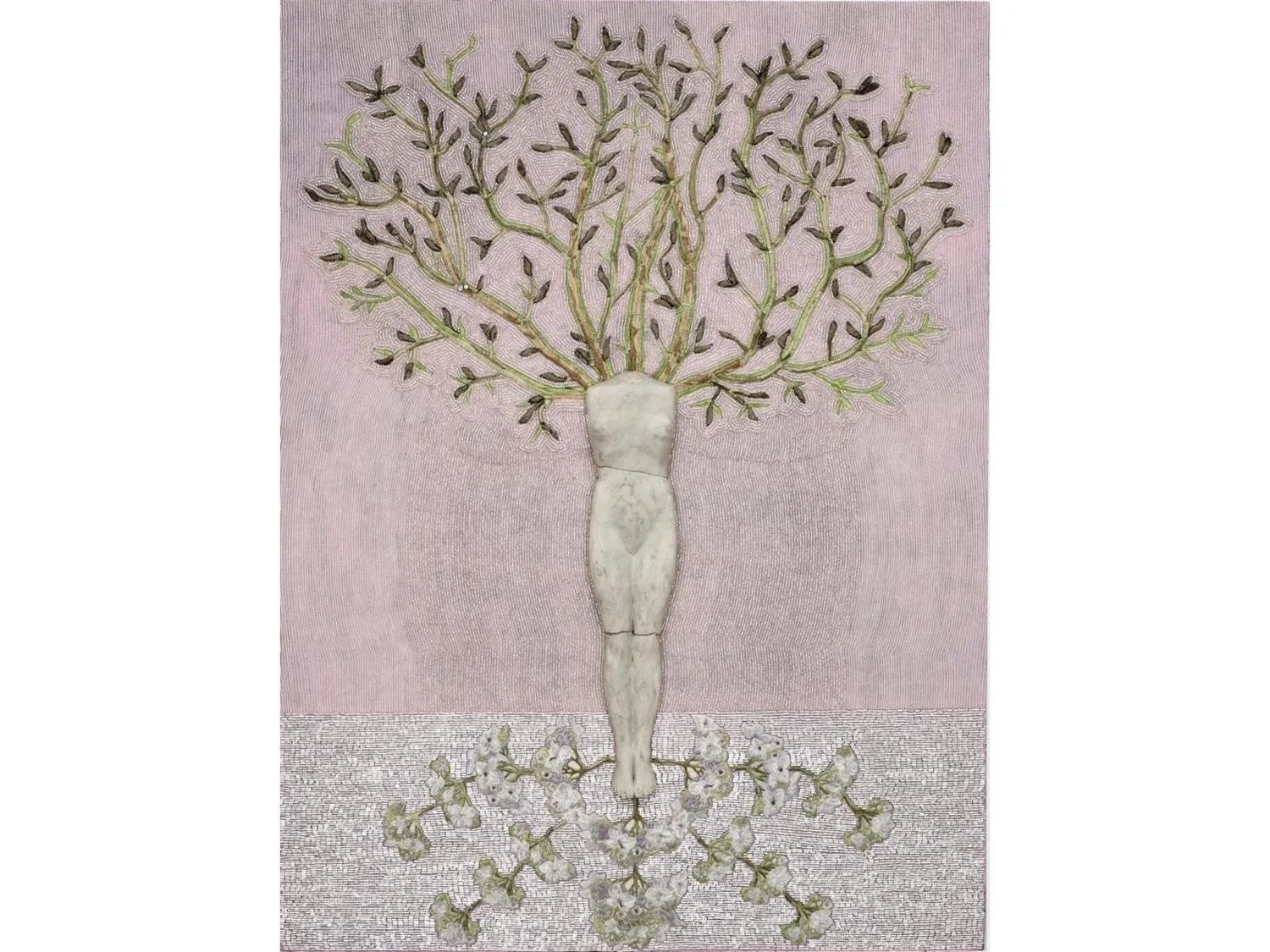
Esperanza Cortés, El Árbol de la Vida, 2023, ceramic sculpture, crystal beads, glass beads, personal embroidery, encaustic on wood 31.5 x 23.5 x 2.5”
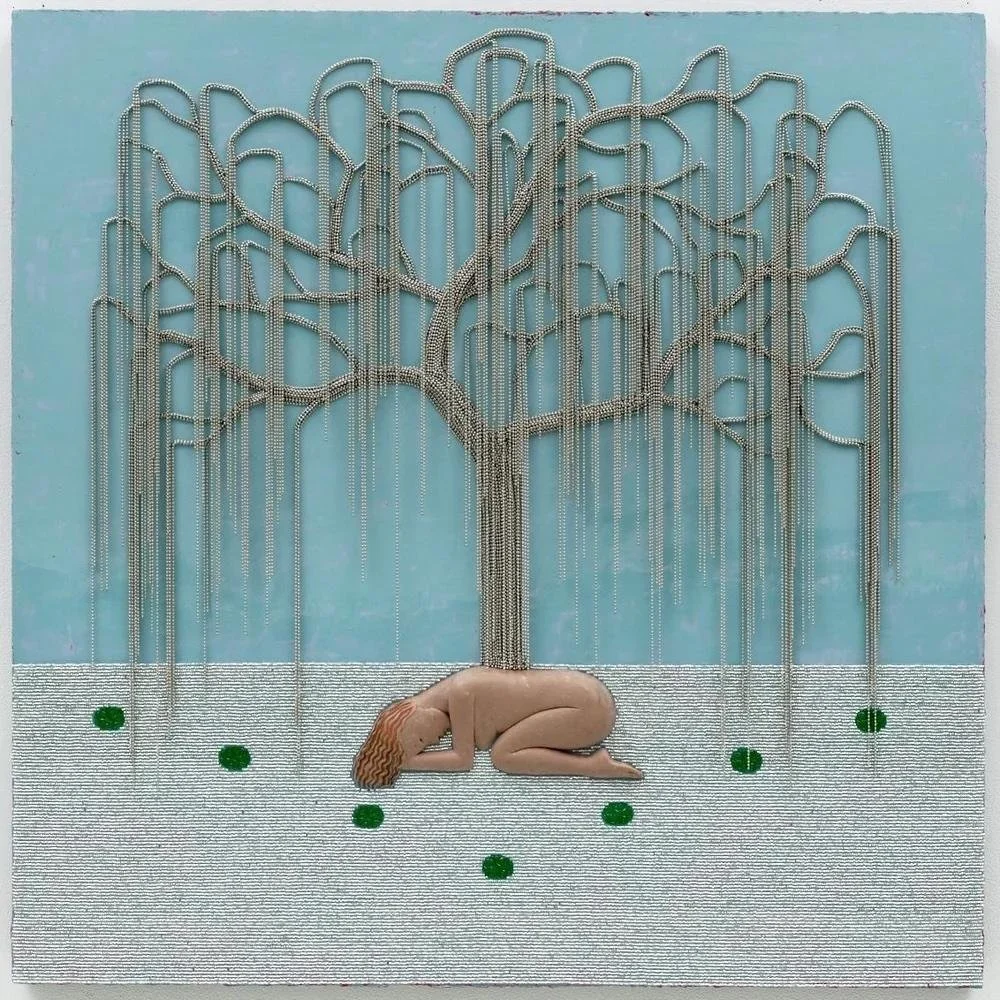
Esperanza Cortés, Weeping Willow, 2024, clay sculpture, crystal beads vintage pressed glass, acrylic on wood, 36 x 36 x 5”
In El Árbol de la Vida (2023) the artist depicts a woman’s body with a tree sprouting out of her torso and roots extending from her feet, burrowing into the earth. Feminine forms appear across Cortés’s work, often intertwined with nature as intermediaries bridging the geological terroir with spiritual tropospheres. The artist emphasizes the transcendent power of matriarchal care and its role as a conduit connecting cycles of life and death, hope and grief. Furthermore, Cortés incorporates the aesthetics of femininity as agents of care, ecology, intergenerational resilience, and a cosmological exploration of life, that of the corporeal and of the terrestrial, originating from and sustained by the femme body and spirit.
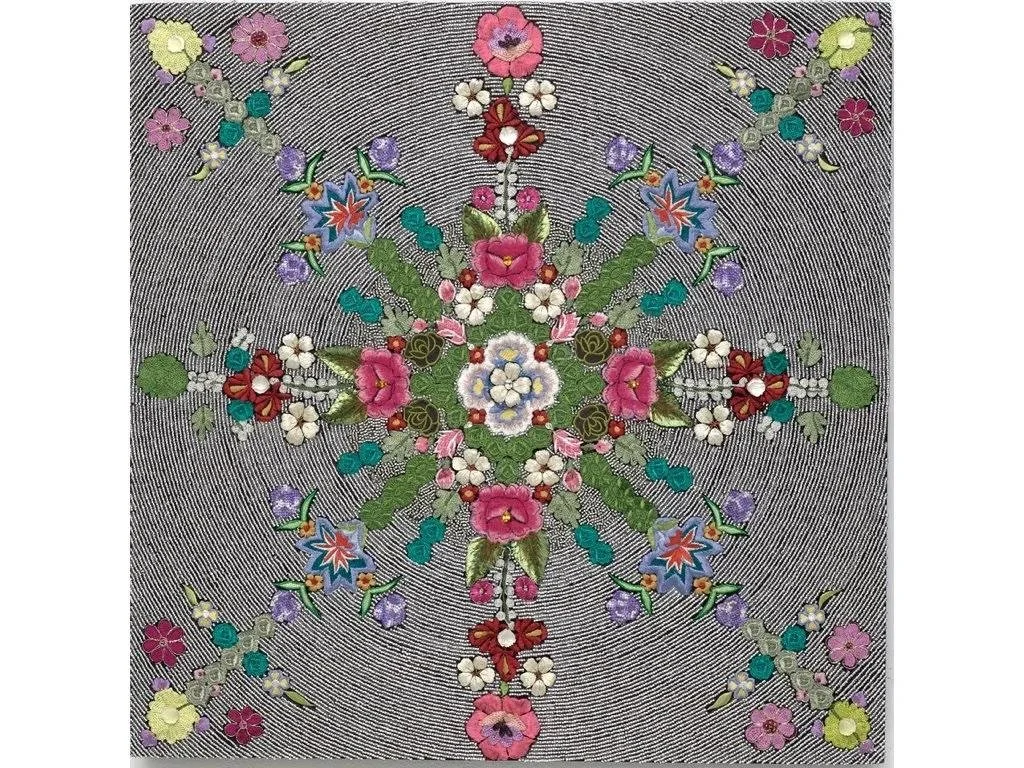
Esperanza Cortés, Metamorphosis, 2024, personal embroidery, crystal beads, glass beads, crystals, acrylic on wooden panel, 24 x 24”
Cortés’s visual language engages with geological layers, traces measuring time, from the underground roots in El Árbol de la Vida to the emanating circles of tree rings in Metamorphosis (2024). The tree rings evoke formal affinities with a human fingerprint, ripple of water, geological sediment, the radiating nature of sound waves, the pump of a beating heart, and the greater cosmos—all driven by enigmatic energy. Cortés's works are alive with movement, possibility, and hope. They posit the potential for a matriarchal approach as a resilient agent of transformation, strength, and thriving life. Marine microfossils layer and rise up to create islands. Plates shift. The ocean floor shoots up in volcanic eruption, altering the topography of the world. Matter has an agency beyond human control yet fundamentally intertwined in our understanding of care. For Cortés, matriarchal power transcends corporeal bounds, holistically interconnected across time as a more than a human conception immersed in nature and all physical, psychic, and unknown matter. Cortés’s works act as altars to the body, nature, belief, and potential. She honors the agency of materials to hold power rather than abused as artifices of wealth and control.
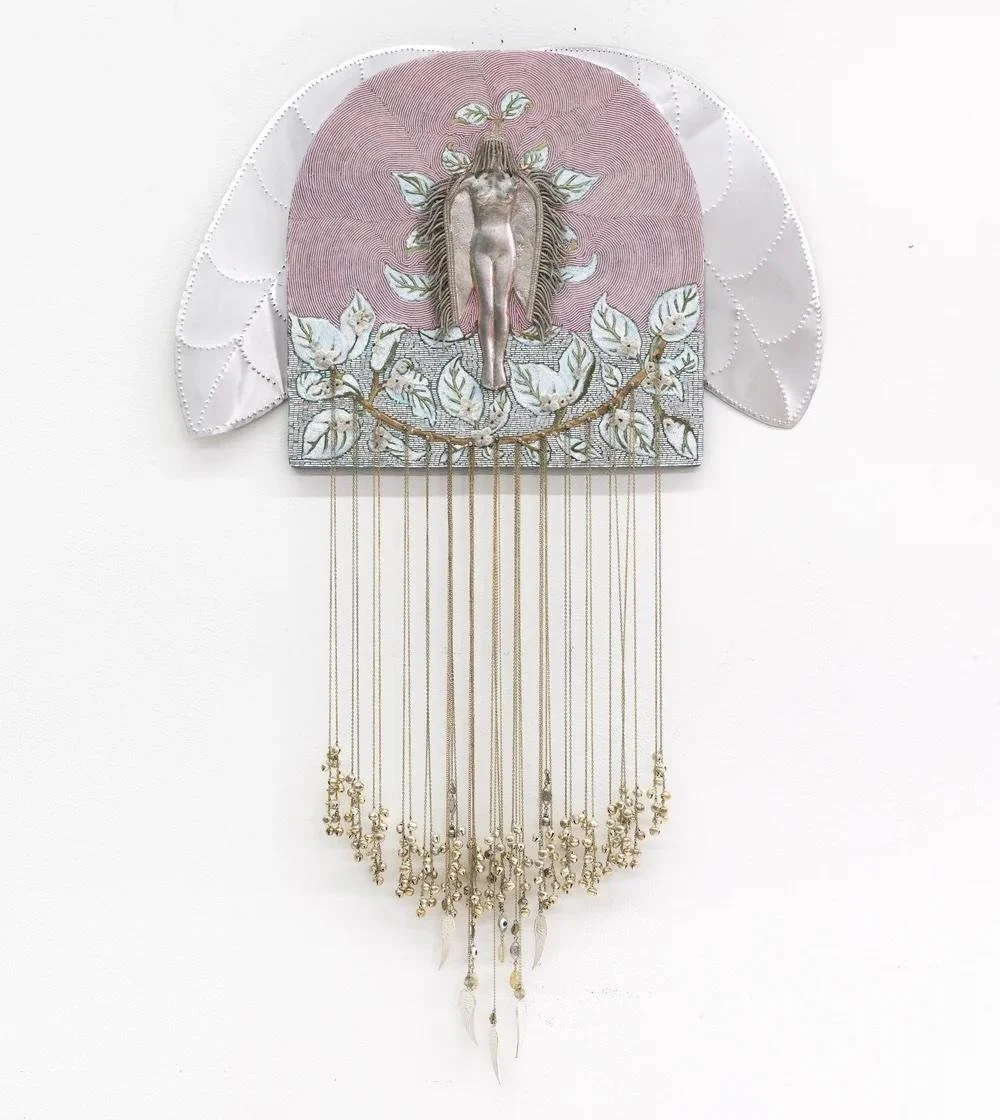
Esperanza Cortés, Colibri/Hummingbird (2024) ceramic sculpture, silver leaf, military silver fringe, crystal beads, glass beads, painted embroidery, hammered metal, chains, amulets, bells, encaustic on wood, 36 x 28 x 4”